Electric fleet and charging infrastructure monitoring.
Structure charging station registries, battery swap logs, electric vehicle fleet identifiers, and electricity source records for low-emission transport projects.
Connecting charging station logs to verifiable transport baselines.
Transport electrification projects—whether deploying commercial electric motorcycles, three-wheelers, urban buses, or public charging networks—generate high volumes of session data across chargers and battery swap cabinets.
Preparing those records for climate-finance verification requires deduplicating charging sessions, verifying charger meter accuracy, documenting whether electricity came from the grid or dedicated solar canopies, and preventing double-counting between fleet operators and charging network owners.
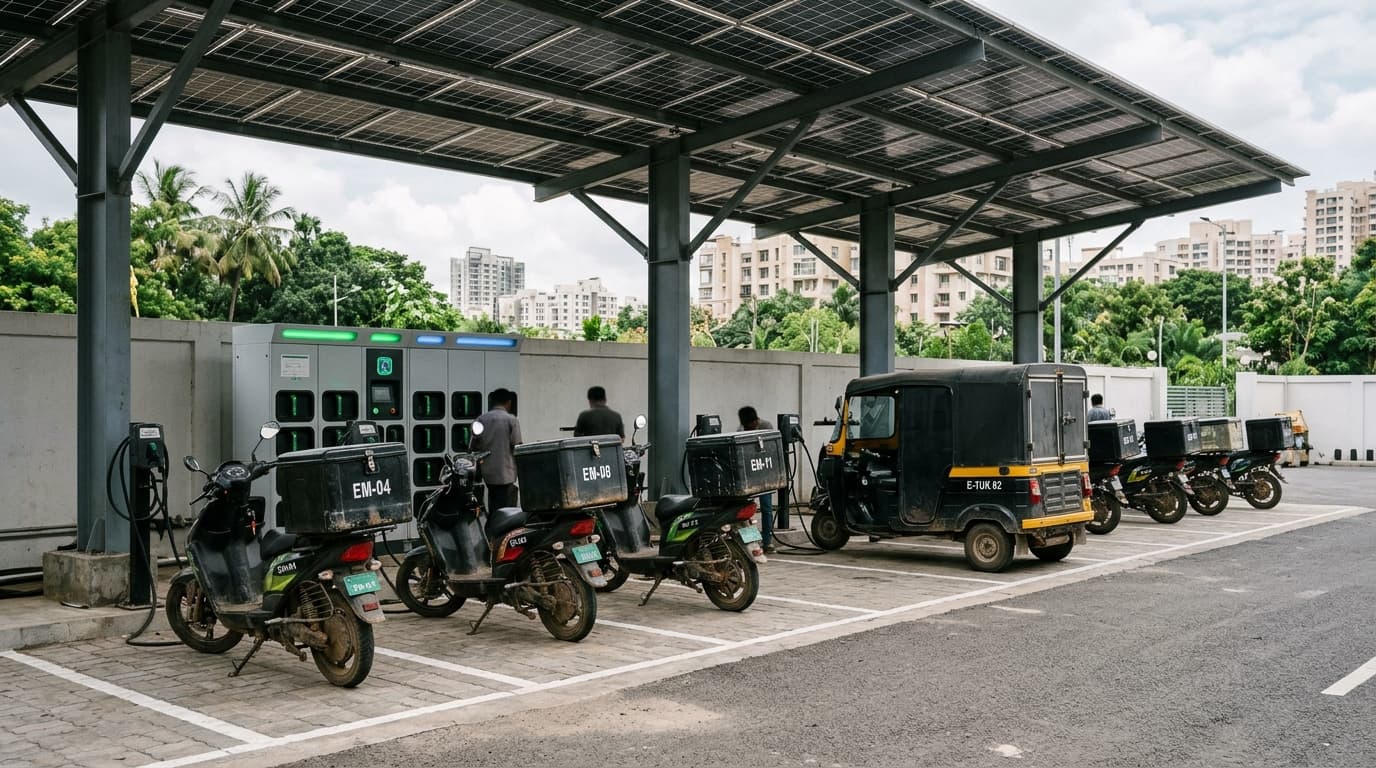
Supporting day-to-day ev mobility operations.
Charging Depot & EVSE Asset Registry
Register charging stations, battery swapping cabinets, connector IDs, location coordinates, and associated renewable or grid power sources.
Fleet Vehicle & Battery Onboarding
Maintain structured registries of electric two-wheelers, three-wheelers, or commercial fleet vehicles with VIN/chassis identifiers and vehicle categories.
Charging Session & kWh Dispense Logs
Record timestamped electricity dispenses (kWh), battery swap cycles, and odometer/GPS distance checks for internal QA screening.
Ownership & Double-Counting Controls
Document project ownership boundaries and legal attestation records so charging energy is not claimed across overlapping programmes.
Field records and supporting documents.
Charger/cabinet serial numbers, rated power output, GPS depot coordinates, and registered electric vehicle class specifications.
Revenue-grade meter readings or session logs detailing electricity dispensed to eligible electric vehicles, separated by grid vs. on-site renewable supply.
Applicable regional internal-combustion baseline emission factors, fossil fuel consumption benchmarks, and meter calibration certificates.
Current capability scope
VeriField Nexus supports asset registration, charging session evidence capture, spatial depot tracking, and QA review workflows for EV Mobility.
- Verra VM0038 (Methodology for Electric Vehicle Charging Systems v1.1): Supported for MRV evidence collection and charging log organization.
- UNFCCC AMS-III.C (Emission Reductions by Electric and Hybrid Vehicles v16.0): Available in the platform catalog for fleet project structuring.
- Automated credit calculation engines for EV mobility remain closed pending project-specific baseline fleet factor configuration.
Bring your next climate project into focus.
Request an organization workspace for your project team, or speak with us about your field monitoring and reporting needs.